Tracy Thrower Conyers is a long-time resident of Westchester 90045. Tracy closely follows local politics, political players and social chatter relevant to Westchester. You’ll frequently find her at Neighborhood Council meetings, as well as on all the social platforms where 90045 peeps hang out. Tracy loves a good conversation about our community, so don't be shy about leaving comments. 😊
On the very last day of the legislative session, Scott Wiener finally scraped together the last votes he needed in the Senate to pass SB-79 by one vote. Now the bill heads to Newsom’s desk for signature. If you’re still catching up on this bad bill, head over to TracyTC.com where I ran a series of articles over the last five months chronicling the bill’s advancement through this legislative session.
This article, written by local Westchester resident Tim Campbell, also provides a strong summary of the bill including the assertion that our current state-driven housing policy is based on the “theocratic belief that only certain officials have the intellectual and moral superiority to make decisions about where and how Californians should live.” And by the way, according to Wiener, we should all be densely packed renters without green space.
I’m not okay with Scott Wiener pretending to be that superior leader and neither should you.
Wiener was only able to cobble together the votes by exempting more cities than the bill includes. He also convinced labor unions to support the bill by giving labor concessions on the densest of projects that probably won’t even be built. Developers will go for medium density on the lot next door to you and me because those projects will be the cheapest and fastest to build and profit from.
How did this happen? There were thousands of bills this session and who can read all of them? I’ve heard anecdotally that many legislators were surprised to hear how bad this bill really is. They only knew the bill its cutesy name – Abundant & Affordable Homes Near Transit. Unfortunately every part of this title is a bald-faced lie.
Even major law firms call this bill “one of the most controversial” bills in California history.
Make no mistake, with our Westchester light rail stop, our community will get hit hard. Oh, and did I mention that habitable floor space in a unit is prohibited from exceeding 1750 sq ft? These are not units for families, even if families can afford market rate rent. These projects are “stack & pack” with no required parking.
Additionally, no unit needs to be “affordable” if there are 10 or fewer units in the project. This means 10 units next door. Oh yay! Not 11. And since the units aren’t affordable, multiple people will have to live in each unit to pay the rent.
One version of the bill also applied to Bus Rapid Transit lines, although I can’t tell for sure if this provision survived. If it did, we will probably see Sepulveda and Lincoln targeted under Tier 2 of the bill. Tier 2 allows 15,000’ on a 5,000’ lot.
Additionally, transit agencies magically now get to adopt any zoning they want for their own properties. I don’t know what is owned here in our community, but this part of the bill sounds like a breeding ground for corruption to me.
SB-79 is a tortured mess that ends up screwing LA and Socal more than anyplace else in the state. The Bay Area (where Wiener is from) is specifically exempted for a longer period for no valid reason that I can discern.
Newsom previously expressed support for this awful bill, but we still have a tiny chance of convincing him otherwise, but we need to act right now.
Please Take 5 Minutes
Newsom can sign the bill at any moment, and might even like the splashy headlines of this bill in his fight with our President.
PLEASE take 30 seconds to CALL OR EMAIL THE GUV NOW, and urge him to veto this bill!
Hello, my name is _________. I’m calling to urge the Governor to veto SB 79. SB-79 will benefit developers, destroy neighborhoods, and do nothing to address our housing affordability crisis.
Or choose any talking point from this list:
This bill only effectively applies to Southern California. Why is that? Follow the money.
This bill includes virtually no affordable units. I don’t support obliterating local land use control for a law that doesn’t even address our affordability crisis.
Southern California is not built to support random density and we can’t afford infrastructure upgrades on a random basis.
The unions are going to be very angry when they find out they supported a bill requiring concessions on projects that won’t actually get built.
SB-79 does not address Southern California’s vulnerabilities for natural disasters. We will not be able to hop buses in case of earthquakes, tsunamis and wildfires.
Local control works to address housing needs. LA has adopted a Housing Element with a housing incentive ordinance that already has 20K units in the pipeline in less than six months.
SB-79 is an illegal unfunded mandate pushing all costs on local government.
The pro-SB-79 forces are extremely organized and very digitally-savvy. We need every last one of us on this list to write in and say VETO SB-79 and tell 10 friends in CA to do the same!
It’s Go Time For Every One Of Us!!
Scott Wiener will stop at nothing to get this pet bill passed. Every one of us needs to call and write the governor. And then do it again tomorrow.
Your message has to be very clear – SB-79 is a one-size fits all bill that is wrong for California and Los Angeles.
Then tell 10 friendsacross the city and state to call the governor, too!
🚨 Please take 30 more seconds to share this post with 10 neighbors or local friends. 🚨
The “Pep Boys” project is coming back to the Neighorhood Council Planning & Land Use Committee on October 15th. The agenda and supporting documents will be posted on this page when available. This project is huge and planned for the Pep Boys/Del Taco lots at Manchester/La Tijera. Please plan on coming out. If they’ve scaled back their project and dropped their discretionary “asks,” there is nothing we can do, but I’m skeptical this is the case.
The Meeting
As I reported in my last newsletter, the City’s Community Plan Update Team presented the latest draft of the Community Plan Update (“CPU”) to the full Neighborhood Council (“NC”) last night. Since the current draft of the CPU has been out since March and fully discussed since, there wasn’t much new information in the presentation. The next draft is probably 4-6 months away.
In fact, there is a movement afoot among Neighborhood Councils to push for a pause on CPU’s until the Housing Element is finalized in February. This makes sense because at present, we are kind of “planning” in a vacuum, not knowing the implications of the builder incentive program (“CHIP”) on our community. Our own NC voted last night to support the pause based on a WRAC motion.
Notable From The Presentation
I did note a couple of items from the presentation. Again, if you’ve been following the whole saga, there was very little new information presented last night. If you’re totally new to this whole CPU thing, start here.
There is a policy document underlying the plan. I can’t tell if it is set in stone or still open for revision, but I do know that nobody is talking about it, and I have a feeling we need to take a deep dive into this document to see if anything is lurking there that could hurt us. I see 8+ “policies” on the planning website, so I really don’t even know what “the” policy document is referenced in the slides last night.
The planners acknowledged that our plan area has carried a big load with Playa Vista. They claim the same for Howard Hughes.
The eastern portion of Playa Vista (closer to the freeway) is being planned as a hybrid industrial area (think “work/live” units), which could be very cool. We’ll see. The area around the metro station is being looked to for hybrid industrial also, but I’m not sure how that is supposed to mix with the surrounding R-1. If anybody has studied either of these areas, I’d love to post any guest article you’d care to write. Let me know.
Probably the most notable part of the presentation is that the mid-level planner on the team stated that we will get our unit allocation in the EIR process. If you’ve been following this process for awhile, you will know that we’ve all been asking exactly how many units we are supposed to plan for, and the planners always deny knowing the answer to that question.
We know the LA goal for this 6th housing cycle is ~255K units (really ~500K units but we already had ~245K zoned for appropriately). We also know other CPUs had already contributed 200K units, so it’s a valid question to want to know how many units we need to plan for. Most of the commitment should theoretically already be met.
The problem is that the planners keep saying that the CPU is a 30 year planning document but the current housing cycle only lasts through January 2031. I fear city planning going to try to shove more units down our throat than we need, claiming that we’re futureproofing past 2031.
What is wrong with futureproofing? If we rezone huge swaths of land, we are going to get random density that might make no sense for our infrastructure and no sense for the neighbors.
So the unit obligation has been a legitimate, ongoing question that the planners claimed to have no knowledge of. Last night was the first indication of learning the number, but will it be too late to fight, once we’re in the EIR process, and why do we have to wait that long? Hearing this was notable. It was not comforting. 🙃
The senior planner stated there are some soft projections in Draft #2. Anybody care to dig in on that Treasure Hunt?
New Developments In Our Community Since March
What is more notable than last night’s presentation are new developments in our community since March, as well as some interesting comments from the Neighborhood Council members.
The biggest development is that the ED-1 developers are coming after our community big time! Approximately 1400 units are in process. If you’re not familiar with ED-1, it is an Executive Directive issued by Mayor Bass on December 16, 2022, aiming to expedite project and funding approvals for 100% affordable units.
“Expedite” means the public can’t interfere. These units are coming and they’re coming soon. As far as I can tell, the CPU team is not adjusting their density plans with any consideration for the huge number of units in the pipeline, but ED-1 and non-ED-1. This is alarming, which I consider one notch above concerning. 😁
Dennis Miller – we’ll lose truly affordable housing to build some not so affordable housing (planners maintain that the Resident Protection Ordinance will protect them)
Julie Ross – LAWA needs to be at the table (senior planner said they are talking to LAWA)
Chip Mallek – our LAX arterials are shared with other non-LA jurisdictions and they need to be at the table – El Segundo/South Bay, Inglewood, Culver City
Theresa Torrance – we are in a tsunami evacuation zone (the senior planner promised to consult the city’s emergency management department, but I find this compelling myself)
Matt Lipschutz – talked about the outbound migration numbers
Alex Reynolds – major university in our footprint and no discussion about those traffic and housing implications
Rumors In The Community
I also need to address rumors I’ve been hearing in the community. These rumors were very much in the room last night and they have to stop.
The first is that Westchester is “being targeted” for ED-1 projects and nobody else is. There is no conspiracy to plaster Westchester with projects. The sad (for us) truth is that we have the cheapest land values on the westside and we are close to the ocean. Cheap land is the only way for affordable unit developers to maximize their revenue. They are limited in what they can charge whether the units are in Brentwood or Westchester. Which community do you think is going to cheaper to buy? The conspiracy crap has got to stop.
Second, the planners have zero control over ED-1 projects. They cannot limit the projects and people going to meetings to demand that don’t understand the limitations.
Third, there is a group in the community going from commercial lot to commercial lot, filming themselves demanding downzoning from the city. Again, they don’t understand that commercial lots in our plan area are already zoned for unlimited height, and our CPU planners and every other CPU team are charged with upzoning. Downzoning is not on the menu of options.
Fourth, claims are being made that Brentwood & The Palisades are being “protected.” This is silly. Yes, they are not in the midst of a CPU and therefore not being considered for that class of upzoning at this time, but they are not exempt from the Housing Element and they are not exempt from ED-1. Will they be less desirable to developers? I think they will be for the ED-1 projects from a cost perspective, but Housing Element implications remain to be seen after adoption.
Further, they will be next in line for CPU’s, but it will be awhile.
A Breath Of Fresh Air
There is one breath of fresh air in these otherwise suffocating topics. Cory Birkett, a member of the Concerned Alliancemade a presentation at the last Neighborhood Council Community Plan Update Ad Hoc Committee meeting floating the idea of a special restricted zone for us in light of the ED-1 implications and our role as gateway to LAX. This idea is in the early exploration stages but shows promise. I’m optimistic, and thank Cory for her out of box thinking. She has been a tireless warrior in this CPU fight on behalf of our community.
So that’s it for today. I’ll be back to you as events unfold. The next big fight is CHIP at PLUM and the full City Council. Neither meeting is scheduled yet.
UPDATE To Recent Legislative Review
Every bill was signed into law except AB 1840. 🙄
Content Authenticity Statement
100% of this week’s newsletter was generated by me, Tracy Thrower Conyers. No AI here. And if I add any, I will tell you. 😊
🚨 Please take a minute right now to forward this email to 5 neighbors or local friends. 🚨
Concerned For Westchester Playa – Sharing upzoning and housing policy information and guidance to residents in Westchester, Playa del Rey, Ladera & Playa Vista
For more background on the Housing Element and CHIP, read this and this.
R-1 is already burdened with ADUs and SB-9 allowing four units on a lot via subdivision.
But that isn’t enough for the developers. They are still coming after our R-1 for even denser building, even though the City has acknowledged we don’t need additional R-1 densification to meet our current RHNA numbers or our AFFH obligations.
Why are developers so fixated on R-1? R-1 lots are cheaper than a commercial lot, and nobody asks for infrastructure improvement contributions when you build.
Currently working its way through the local legislative process is a completely redone Housing Element. Community Plan Updates (CPUs) (hyper local focus) are just one component of the Housing Element. Another is the builder incentives ordinance known as CHIP (Citywide Housing Incentive Program).
Yes, you read that right. CHIP is citywide, regardless of whether your community is undergoing a CPU or not. CHIP will apply to us no matter what we put in our CPU. In our case in Westchester Playa, the Housing Element & CHIP have been more of a distraction than anything, and maybe that’s the point. We didn’t even start talking about the Housing Element & CHIP until it was almost too late. Fortunately our friends at United Neighbors were fighting the good fight for us.
I urge you to read the “background” section of the city’s Housing Element program. The entire program is premised on the many times debunked theory that an overabundance of housing will make everything cheaper and attainable. Ask Vancouver how that theory worked out for them.
So that is all the background you need for this discussion here – “build baby build” doesn’t work and it’s what Los Angeles is trying to shove down our throats, to the detriment of our mature R-1 communities.
The first draft of CHIP included R-1 lots as eligible for incentives. There was a ton of pushback on this by R-1 homeowners led by United Neighbors. R-1 was dropped from CHIP with draft #2 and we thought we dodged a bullet.
I attended the public hearing on draft #2 and was absolutely shocked to hear the lead planner literally invite people to convince them why R-1 should go back in the ordinance. I had an opportunity to give public comment supporting the R-1 exemption, along with some of our neighbors, but we only represented about 10% of the comments. I was sweating bullets from the end of that meeting until draft #3 came out.
The third draft dropped last week. R-1 is still not in the main recommendations report, but buried in Exhibit D is a strongly worded argument why the Commission should bring R-1 back into the Ordinance and 7 strategies laid out like a pick and choose menu. 😱
The Ordinance heads to the Planning Commission this week for a public hearing. We need comments!! The official deadline for comments has passed, but we should keep pushing, especially in light of this new information. If you can attend the meeting on zoom and make a public comment, that will be even better. Find the agenda here with instructions.
Our Neighborhood Council wrote a Community Impact Statement supporting an exemption for R-1. Kentwood Home Guardians, a 3400 property HOA in our community, wrote a similar letter, but we need volumes of comments and letters.
If we lose this fight, CHIP is going to going to kill our Community Plan Update efforts. R-1 is already subject to ADUs and SB-9. We just don’t need the impacts of CHIP added to our burden, especially when the city admits they don’t need R-1 to meet the already overly aggressive rezoning mandate.
New Information
At first read, it appears that R-1 is still out in the recommendations report sent by the planners to the Planning Commission, but United Neighbors discovered a ticking time bomb in the details – as in page 830 of the 2050 page report! 😱😱 The planners suggest that putting R-1 back in will further support “equity goals” and offer 7 options to upzone R-1, any one of which will decimate WPDR. We will likely qualify for all 7 if they are all added.
I read that as a big fat Robinhood statement and a middle finger to single-family homeowners. The problem with my Robinhood analogy is that most of us are not rich and the city doesn’t need our neighborhoods to meet state mandated goals for housing. Does this make you mad? Sign our petition! And then submit your hearing comments and show up to speak if you can. It’s very empowering!
Tracy is active in a number of local community organizations including the Neighborhood Council PLUC, Neighborhood Council Ad Hoc CPU Committee, Kentwood Home Guardians and Emerson Ave Community Garden Club. The views expressed in this post are Tracy’s alone, and should not be construed in any way as an opinion of any other group. Are you planning a meeting with the planners? Have Tracy along to make sure you get the same information other community members get. Are you willing to host a group of your neighbors for a talk on housing policy and zoning changes? Tracy would be happy to join you.
About Tracy Thrower Conyers Tracy Thrower Conyers is a long-time resident of Westchester 90045. Tracy closely follows local politics, political players and social chatter relevant to Westchester. You’ll frequently find her at Neighborhood Council meetings, as well as on all the social platforms where 90045 peeps hang out. Tracy is a real estate broker and founding principal in Silicon Beach Properties. She is a recognized expert on Silicon Beach and its impact on residential and residential income real estate, and has been featured by respected media outlets including the LA Times, KPCC and KCET. Tracy is also a licensed attorney and accidental housing policy junkie.
The Planning Department is taking public comments on the Housing Element until August 26th. I wrote more about this topic here, along with instruction for submission.
Public comments submitted to the record are the normal way for the public to share their desires, but possibly that method was working too well for those of us who want to keep high-rises out of our low-rise neighborhoods.
So City Planning decided to put up a poll and it sucks, to put it mildly. The questions are vague and poorly drafted, and anybody with an email address can fill it out. There are so many ways this poll can be manipulated.
While we’re all submitting our public comment the accepted way, please take 60 seconds to fill out the poll, too, so that we can make our voices heard over there, as well.
If you share our philosophies about keeping high-rises out of low-rise neighborhoods, we have suggested responses for you to speed you through the process:
Residential areas where more housing can be added — [ ] Major Corridors or Streets (I don’t like “streets” but this is the best response of what is offered)
Would you like to see more housing in areas zoned for single-family uses? — [ ] I wouldn’t like to see more housing in single-family zoned areas
Do you have other ideas? — [ free text ] The city’s own numbers show that we don’t need high-rises in our low-rise neighborhoods yet. Don’t destroy our mature low-rise neighborhoods until we are out of other options.
By the way, this poll seems to be shape-shifting. Question number 3 is different than when I filled out the poll a few weeks back. 😵
What are your thoughts about the poll? Drop a comment below after you fill it out.
Our fight against high-rises in our low-rise community has consumed us for just over a year now. Every time I think we’ve won, we get blindsided again.
First we fought back big time on the Community Plan Update after Draft 2 started dribbling out in secrecy in June of 2023.
Heck yes, we were mad! We rallied, we brought out the media, we signed petitions, we put signs in our yards, we got the attention of our Neighborhood Council and our Councilwoman’s office. We were not taking Draft 2 lying down.
And we prevailed! It was a long, arduous fight, but Draft 3 took nearly all the high-rise risk out of our low-rise neighborhoods.
We thought we were done, but I was already sounding the alarm about the Housing Element. We barely knew what it was because we were so busy with our Community Plan Update, but I knew the Housing Element was citywide and I knew it was bigger than our CPU. I wrote about it everywhere I could, trying to get word out. Find some of my articles here, here and here.
Fortunately for us, while we were distracted with our CPU, our friends at United Neighbors were focused on the Housing Element and meeting a lot with that Planning Team. Read more about their efforts here.
As a direct result of all their hard work, single-family zones were removed from the builder incentive ordinances for the new Housing Element. United Neighbors demonstrated that we have ample capacity on our corridors to build the required number of units under our housing unit mandate from the state.
To say that the developers and their shills were outraged by this turn of events is an understatement, but again, we thought we dodged the high-rise bullet.
We could not have been more wrong.
July 25th brought the Public Hearing for the implementing ordinances of the Housing Element, including the builder incentives. I might have easily skipped this meeting because I thought everything was a-okay. I spoke with other community activists in the density fight, and they thought the same.
Something about an email from United Neighbors caught my attention and I agreed to attend and make remarks in support of the existing draft excluding high-rises from single family neighborhoods and the coastal zone.
I started a little preparatory research at the last minute and my heart sunk. I found the usual progressive influencers – LA Times and LAist – were urging people to come out and fight to change LA’s historical racist segregation via single family zoning. Not a peep about the fact we have adequate capacity outside our low-rise neighborhoods to build density.
I attended the Planning Department’s informational presentation before the public hearing and realized we were in deep doo-doo when the head planner said this during the presentation in what felt like an orchestrated perfect moment:
“[after acknowledging that SFR was in the ordinances and then removed] That said, we’re looking for your feedback today and we appreciate all the folks who’ve come out here today to share their perspective related to single-family,” Smith said. “We’re very much in a listening phase.”
I think my heart actually stopped. She is the senior lead planner for the Housing Element team and she was suggesting that the pro-developer voices could still effect changes to the ordinances.
The public hearing and testimony started and I got to speak in the #3 spot for public comment. I had the usually allowed two-minute remarks all scripted and practiced, but so many people came to speak that they limited remarks to 1-min, and I was left to drastically cut my remarks on the fly.
There are so many things I wished I’d said, but LAist quoted me in their follow up story on the hearing. I don’t know if what I said was some kind of brilliant, or whether they just have a short attention. I was, after all, #3. 😁
OK, so this is a nice story, but why am I writing this lengthy post?
We got creamed in public comment. 😱 Maybe 10% of the commenters were in favor of keeping the single family zone and coastal zone restrictions. The other 90% were calling it “a moral imperative” to open the rich white single family zones to less advantaged people to fix historic segregation.
All of this right after the head planner said the team was “very much in listening mode.” And they were hearing a lot from the people who want to obliterate our neighborhoods.
It literally broke my heart that the primarily young commenters really believe their lives are going to be better by wrecking our neighborhoods. They don’t understand that our communities will not be that desirable with random high-rises on our streets.
A few commenters literally said that individual owners aren’t required to sell, with zero understanding that nobody will want to stay with high-rises all around. Even one high-rise will ruin privacy and light access for a lot of neighbors who paid a premium to avoid living like that. It will be a race to the bottom to see which of us can sell out first while values are still strong.
Not only will our neighborhoods be ruined, virtually none of the high-rise units will be remotely affordable. The naivete of those commenters. 😥
I swear, their mantra is if we can’t have what those rich white people have, let’s burn it all down. And I scoffed at the criticisms about the “trophy generation” and here they are….
We still have an opportunity to make our voices heard!
Written public comments can still be submitted and added to the record, but there isn’t much time and very specific instructions have to be followed, which I’ve provided here.
We don’t need essays. We need commenting volume. Please take a minute right now and forward this message to 10 people in LA who share our belief that high-rises don’t belong in low-rise neighborhoods.
And then submit your own comment. And then submit one for your spouse. 😁
You won’t regret the 10 minutes it takes to forward this message and lodge your own community comment for the record. It’s really very empowering and I’ve made it super easy for you with my step-by-step instructions. Comments are due by August 26th. And while you’re at it, please spend one minute filling out the city’s silly poll on the same topic.
For almost a year we’ve been in an uproar in our community over our Community Plan Update (“CPU”). For those of us who have lived in our community for a long time, we readily recognized that this CPU was unlike any other in the past.
The update process started out normal enough in 2017, with lots of community engagement opportunities and a 1st draft that raised eyebrows with what felt at the time like extensive upzoning along Manchester. We would later learn just how bad the city wanted to upzone our plan area.
This photo below is still on the planning website, pretending to depict the process. This photo is more like 2018 when I attended multiple events that looked just like this one. This photo is the opposite of how the 2nd draft went down. And the 3rd draft didn’t come from outreach like this, either.
After the 1st draft came the pandemic. Everything everywhere shut down. Little did we know what Sacramento was up to while we were all busy navigating our new normal.
And then came the shenanigans with the secret Advisory Group and Draft #2 with its crazy proposed upzoning. We were outraged.
The 3rd draft of the CPU dropped last month and it looks like we were heard. All the yellow in the map below is a full reversal of the single-family upzoning we fought so hard to prevent, but the pinks and the oranges and the blues and the maroons are still a problem (hint – the dark pinks are the worst). Navigate the interactive map here with the color explanations.
But Wait! There’s More
But while we fixated on CPU-gate, a whole other density scheme was progressing in tandem that we barely looked at – the Housing Element.
You can read more about the Housing Element background here, but I’ll summarize the cliff notes for you:
Los Angeles is a charter city (125 of 478 cities in CA are charter cities)
LA’s General Plan is composed of 11 different elements, including the Housing Element
LA’s 35 Community Plans make up the Land Use Element of the General Plan
The Housing Element must comply with specific standards and requirements set by the State and must be updated every eight years
We are currently in the midst of our 2021-2029 Housing Element cycle
LA’s Housing Element is 377 pages (find an index here) and is called the “Plan To House LA”
So what we have is the Housing Element proceeding on one track and the CPUs proceeding on another (the Land Use Element track). Together they constitute LA’s Housing Element Rezoning Program.
The CPUs are rezoning parcels (read “upzoning”) and the Housing Element’s Citywide Housing Incentive Program (CHIP) lays out the builder incentives (“developer giveaways”). (fact sheet) (draft ordinance – 85 freaking pages). CHIP, along with three other ordinances constitute the “Housing Element.”
While we’ve been focused on the upzoning, the giveaways have been progressing without us watching. And we’ve missed a lot! 6 core progressive strategies in 4 hefty ordinances:
Adaptive Reuse (remove process barriers and streamline conversion)
Affordable Housing Overlay (provide tailored land use incentives for affordable housing developments in high resource areas and incentivize affordable housing on faith based owned properties, parking lots and publicly owned sites)
Update to Affordable Housing Incentive Programs (local Density Bonus and Transit Oriented Communities (TOC) programs will be amended and expanded to provide tailored affordability, reflect recent updates to state law, and serve as the overall incentive based framework for the program)
Missing Middle (remove limitations to facilitate construction of low scale/low rise housing) (focused in higher opportunity areas and areas near transit)
Opportunity Corridors (increase housing capacity on major corridors, particularly those with transit access)
Process Streamlining (remove procedural barriers and create efficient and expedited processes for projects with an affordable housing component)
the 4 ordinances (expected adoption is Fall 2024)
CHIP Ordinance → (1) State DB Law, (2) Mixed Income Incentive Program (opportunity corridors and missing middle and TOC defined by housing opportunity maps) and (3) affordable housing incentive program
Citywide Adaptive Reuse Ordinance (fact sheet) → expands current ordinance
Housing Element Sites Ordinance (fact sheet) → this is related to an Inventory of Adequate Sites and minimum densities
As we studied and learned about the upzoning that came with our CPU, we learned about RHNA numbers and the State’s directive that LA rezone to allow almost half a million new units, notwithstanding the great outward migration we’re experiencing in our City and our State.
What I haven’t seen is any mandate that we provide all these builder giveaways. I could be wrong, but I follow these developments quite closely. This is a new question in my mind and I’ll be doing more research. Do let me know in the comments if you’re aware of a mandate. There have been so many gross giveaways by our legislature, I could surely have missed a few.
If there is no mandate, I have to say that CHIP is just too aggressive. We don’t need more market rate units. Full stop.
Why do we need the Density Bonus? I understand there is a state law, but I think I’m reading that the City is expanding even that?
And why do we need the Transit Corridor bonuses? I say, go with the AHIP (affordable incentives) and be done.
We need more affordable units. Forget the rest of the giveaways with their token affordable units and net loss affordable units.
I’m not even in favor of the FBO program with 80% affordable units. Churches are in single-family communities. Those communities don’t want high rises. Has Planning not been listening??
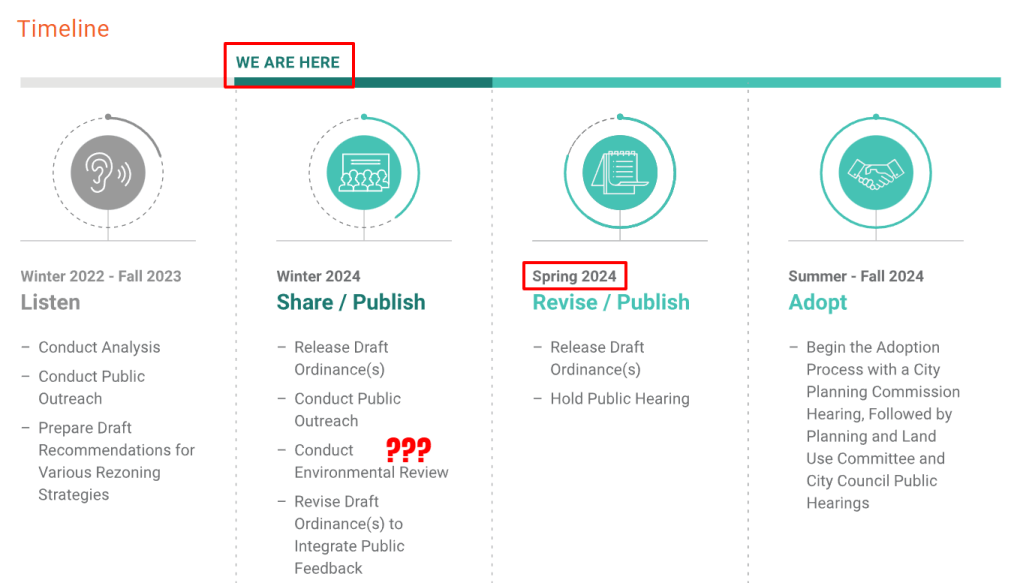
The process seems to be delayed, so I believe we might still have time to catch up. It’s Spring and I haven’t heard anything about Environmental Review for CHIP or the Housing Element. Please drop a comment if you know differently.
The CHIP Maps Drop
CHIP is the builder incentive program, which I not so fondly call the giveaways. Some of the giveaways are specifically geared toward affordable housing. I support more affordable housing, but pay close attention to how many extra market rate units (which we don’t need) are in the project, plus how many truly affordable units are destroyed on the process (“net loss” of affordable units).
For example, a project might tear down four truly affordable units to build 10 market rate units and two affordable units (defining “affordability” in a not so affordable way). This is a net loss of affordable units and a tragedy for our city.
With this lens in mind, below are excerpts of the maps for our plan area. You can try navigating the city’s explorer maps here, but they don’t make it easy.
CHIP’s Opportunity Corridors
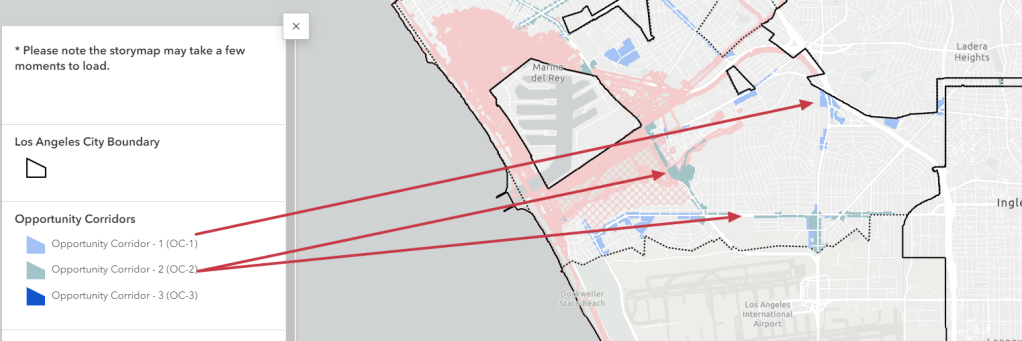
Please note, the arrows are examples only and not meant to provide an opinion on the highlighted parcels. Sites located along the Opportunity Corridors would be eligible for development bonuses in exchange for set-aside affordable units. Development incentives have been tailored according to the type of Opportunity Corridor and type of transit proximity, with scaled development incentives as projects are farther from high-quality transit. Generally, sites would be eligible for scaled FAR and Height (up to 5 or 8 stories) based on proximity to transit. They are so casual about 8 stories!
CHIP’s Corridor Transitions
The Opportunity Corridor Transition Incentive Area proposes to remove limitations on development to facilitate the construction of various types of “low-scale” (“low-rise”) housing, such as bungalow courts, townhomes, and courtyard apartments that were commonly built before the 1950’s, to fill the gap in housing options between lower-scale residential neighborhoods and mid-rise apartments.
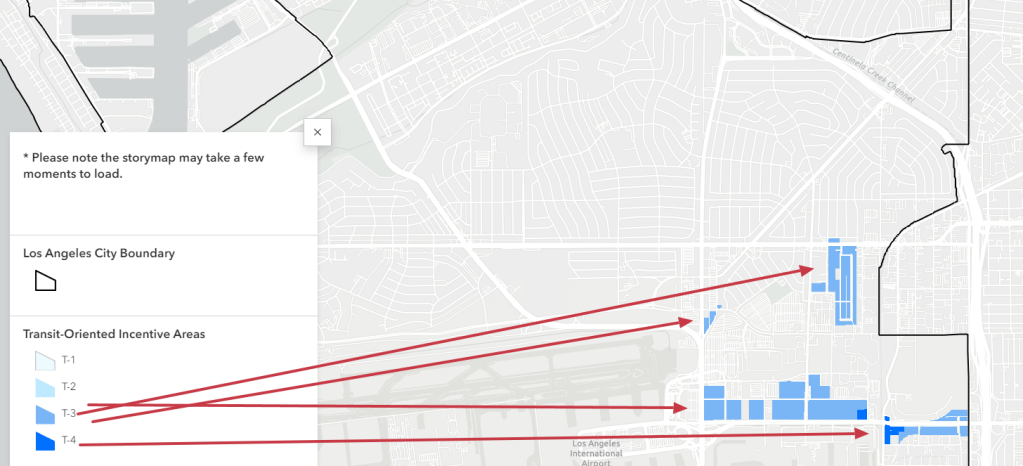
CHIP’s Transit-Oriented Incentive
The Transit-Oriented Incentive Area (TOIA), according the city’s website, provides opportunities citywide for the construction of affordable housing through tiered development incentives for projects within one-half mile of a high quality bus stop or major transit stop, increases housing options for residents of all income levels, and promotes access to public transportation. This program proposes to codify key elements of the Transit Oriented Communities (TOC) Affordable Housing Incentive Guidelines for sites near transit citywide.
It’s hard to read this map, but the indicated parcels are along Century Blvd. and the Reading/Ramsgate area. No other TOIAs appear in our plan area.
CHIP’s 100% Affordable Housing Incentive Program
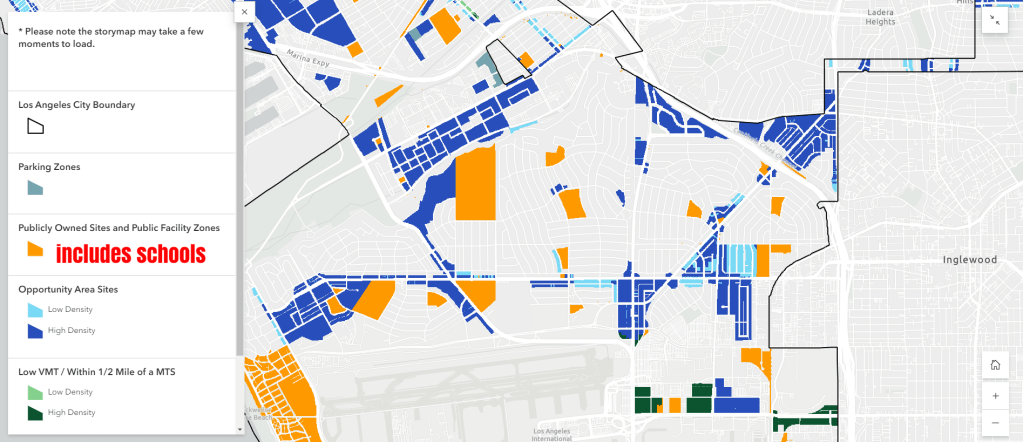
AHIP will streamline procedures and offer land use incentives scaled at higher and lower density contexts for 100% Affordable Housing Projects citywide. For example, if a site is zoned for lower density (i.e. less than 5 units) it will qualify for lower incentives (like height or FAR) than a site zoned for a higher density scale. Sites eligible for 100% Affordable Housing project incentives are found in Low Vehicle Mile Traveled (VMT) sites, and in Opportunity Area Sites (i.e. Moderate, High and Highest Resource areas as defined by the TCAC/HCD Opportunity Maps). Incentives are also designed to be greater in high and moderate resource areas for the purposes of Affirmatively Furthering Fair Housing and equitably distributing affordable housing development.
Additionally, the ordinance will expand the types of zones eligible for 100% Affordable Housing projects to “P” Parking zones and “PF” Public Facilities zones, and to parcels owned by public agencies. 100% Affordable Housing projects in P or PF zones will qualify for tailored incentives where projects may apply the least restrictive zoning regulation of their adjoining parcels.
Note the yellow parcels below are publicly-owned properties, such as public schools. We all assume they will continue to be schools, but with declining enrollment, this could be one way the city sneaks a bunch of high rises into our single-family low rise communities. The planning website specifically calls these parcels “citywide parcels eligible for AHIP incentives.”
This particular Incentive Plan will crush Lincoln Blvd., SE Westchester and NE Westchester up into Ladera.
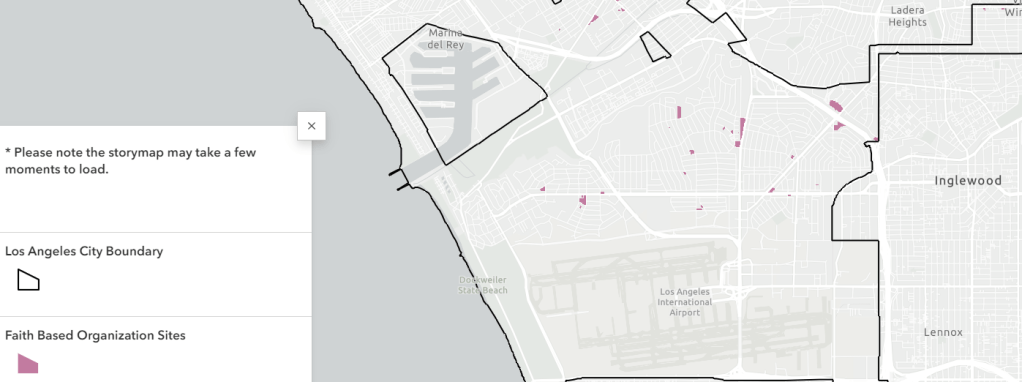
AHIP adheres to the minimums of state law for Faith Based Organizations (“FBO”) tailored incentives and extends eligibility to projects that provide at least 80% affordable housing projects on sites owned by Faith Based institutions. The program’s Faith Based Organization Sites incentives build on the state’s Senate Bill 4 and include provisions created from stakeholder feedback that are intended to make FBO projects more feasible.
That paragraph above is mostly taken from the City’s website. I read “stakeholders” to mean developers because I’m highly skeptical there is a large group of everyday citizens who understand this faith-based development idea.
CHIP’s State Density Bonus Program
State Density Bonus Law (California Government Code Sections 65915-65918) mandates local jurisdictions to offer density bonuses, parking reductions, and other incentives in exchange for the provision of restricted affordable housing units in multifamily residential developments.
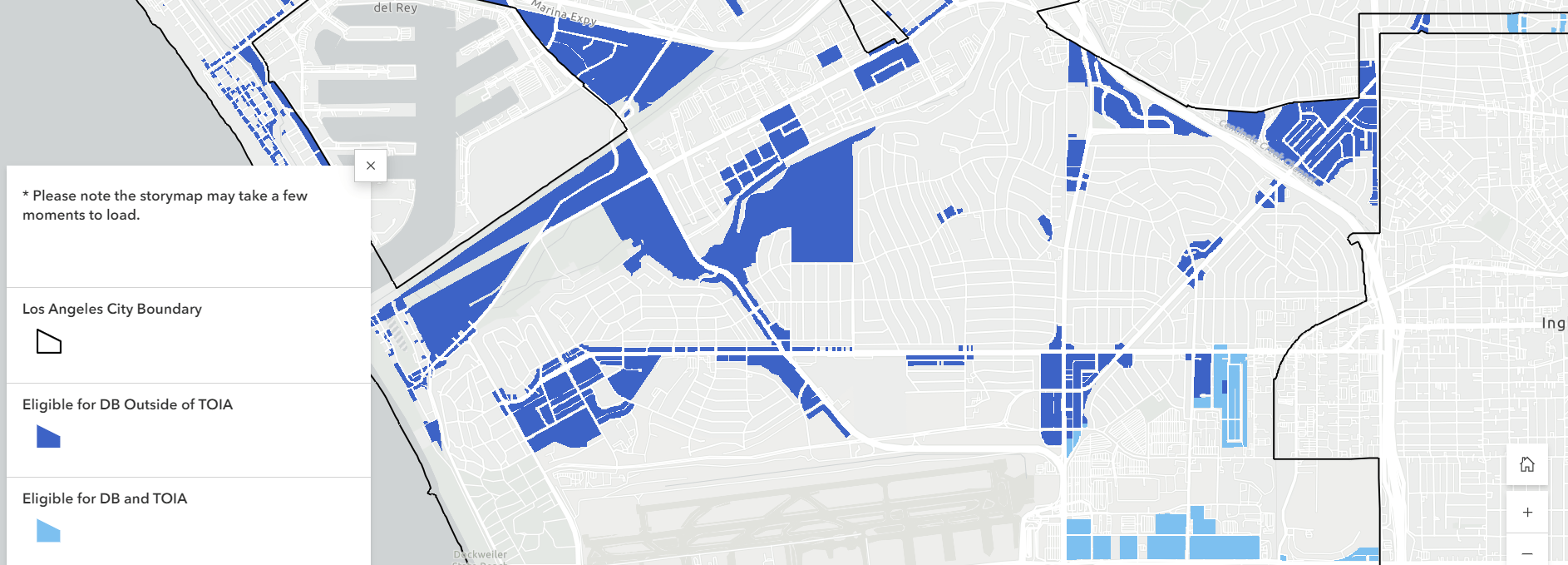
The map shows parcels currently eligible to take advantage of the State Density Bonus Program. As part of the Mixed Income Incentive Program, the City is also proposing the Transit Oriented Incentive Area Program, and many of the same parcels that are eligible for State Density Bonus incentives are also eligible for incentives available through the Transit Oriented Incentive Areas.
As with the Affordable Housing Incentive Program, Lincoln Blvd., SE Westchester and NE Westchester up into Ladera will get crushed. Remember, “reduced parking.” 😱
Adaptive Reuse Housing Incentive Program
The proposed Adaptive Reuse Ordinance will expand the existing incentives to encourage converting underutilized buildings into new housing. Currently, only buildings constructed before July 1, 1974 are eligible. This updated ordinance establishes a faster approval process for the conversion of existing buildings and structures that are at least 15 years old to housing and expands adaptive reuse incentives citywide.
Presumably we are already used to traffic and density associated with commercial buildings and reuse is good for the planet, but I’m told by experts that the practicalities of repurposing commercial properties will probably not pencil out for housing developers, so I’m calling this one the “wink and a yawn” initiative.
Are We Done Yet?
This is a lot, right? We’re supposed to be rezoning for only 255K units across the entire city to meet the outsized RHNA mandate, and it feels like our little ole plan area (one of 35!) is taking the whole burden between the zoning changes and the builder giveaways. The housing progressives are out of control and poised to blight our communities for generations to come. Don’t forget, these incentives will be taken up one at a time and represent huge oversized projects rising up like a middle finger to the rest of the community.
Concerned Neighbors wants to hear from you! What priorities should we be pushing regarding the Housing Element and CHIP? If the city doesn’t hear from us, that gives them room to default to their developer “stakeholders.” Those aren’t the stakeholders who have to live with this mess. Send us your comments below and we’ll be formulating our recommendations soon.
Tracy is active in a number of local community organizations including the Neighborhood Council PLUC, Neighborhood Council Ad Hoc CPU Committee, Kentwood Home Guardians and Emerson Ave Community Garden Club. The views expressed in this post are Tracy’s alone, and should not be construed in any way as an opinion of any other group. Are you planning a meeting with the planners? Have Tracy along to make sure you get the same information other community members get. Are you willing to host a group of your neighbors for a talk? Tracy would be happy to join you.
About Tracy Thrower Conyers Tracy Thrower Conyers is a long-time resident of Westchester 90045. Tracy closely follows local politics, political players and social chatter relevant to Westchester. You’ll frequently find her at Neighborhood Council meetings, as well as on all the social platforms where 90045 peeps hang out. Tracy is a real estate broker and founding principal in Silicon Beach Properties. She is a recognized expert on Silicon Beach and its impact on residential and residential income real estate, and has been featured by respected media outlets including the LA Times, KPCC and KCET. Tracy is also a licensed attorney and accidental housing policy junkie.
A poster on Nextdoor recently asked about status for our Community Plan Update (“CPU”), and the comments surprised me. I saw a deep misunderstanding in our community about housing policy in this state and what is facing us here in LA and more specifically, Westchester/Playa.
I’m not really surprised about the widespread misunderstanding. We’re being pelted from so many directions, you practically have to be a scholar on housing policy to understand the nuances. While I’m no scholar, I have been closely following the issues for almost a decade and I belong to several housing groups where these topics are regularly discussed. Here are my cliff notes to help bring you up to speed on the different issues, along with my latest information on the next round of CPU draft changes.
From the highest level the state’s housing authority runs a housing assessment cycle called the Regional Housing Needs Allocation (“RHNA”). Every six years they dictate the number of units we need to build in CA to house our citizens. We are currently in a cycle that runs from 2021 to 2029.
Unfortunately, the ultra progressive factions are having a moment and pushing through a housing agenda with a lot of unrealistic and downright stupid housing policy (trickle down from the left, anybody??). They pushed through SB-9 which pretty much does away with single family zoning and local control as a matter of state law. It’s a problem, and comes during a time when California is losing population, especially losing our more affluent population, the people who pay for government giveaways favored by the factions currently in power. I wrote more about these laws last year here.
But SB-9 and the other state laws are a completely different issue than what we’re currently experiencing with our CPU. The CPU is about zoning changes and quotas. And these quotas come from one agency, California’s Housing & Community Development (or “HCD”). I wrote this summer about the alarming quotas in the current cycle here.
LA’s staggering quota and its response to our assigned quota is to rezone wide swaths of our city. Some of that rezoning is being done with a rewrite of the city’s Housing Element. A lot of it is being done with Community Plan Updates (CPUs).
The city will tell you they have to comply with the quota, or the consequences from the state are draconian. I agree the consequences are ridiculously draconian, but instead of rolling over and rezoning, I’d like to see some critical pushback by the city on the numbers, especially in light of our declining population. This mindless rezoning could result in devastation to our mature single-family home communities before most people wake up to the idiocy of the strategy.
Our CPU in Westchester/Playa started well before the pandemic and has been going on for awhile. My first hint we might be in trouble was when they announced the entire westside (south of Santa Monica) would undergo concurrent CPUs. That is unheard of, and my current understanding based on wide reading and conversations with various city officials and other pundits is that this method was chosen to dump tens of thousands, if not hundreds of thousands of units on the westside, with maximum flexibility on where they dump the units. For years, people from other parts of the city complained the westside wasn’t doing its part to house our citizens.
It bears pointing out that Pacific Palisades and Brentwood are also considered the “westside” and they are not part of this exercise. They will get new CPUs at some point, but this crazy allocation dump will likely be over by then.
NOTE: We’re not talking about built units when talking about the CPUs and rezoning, we’re talking only about rezoning, which in my mind is worse. The city plans to rezone many multiples of the needed number “in hopes” the needed number gets built. So instead of focusing new development in a concentrate area (like Playa Vista when it was built) where infrastructure can be built to support the new units. we’re all at risk of random “middle fingers” popping up next to our home blocking our sun and sucking up our parking and sewer system.
Also important to note, HCD and our state legislators don’t care about the crumbling infrastructure. That’s their idea of “local control” – they dictate stupid numbers and we figure out the consequences locally. There is going to be a nasty day of reckoning with failed infrastructure that nobody at the city level is talking about.
The first draft of our CPU (pre-pandemic) was an affair with tons of public outreach and opportunities to have a say, or at least be heard. Then came the pandemic. The CPUs slowed down but the public meetings stopped. Last summer (post-pandemic), city planners dropped the 2nd draft of the westside CPUs. They didn’t drop them for the public. They dropped them to a hand-picked “advisory” group. And while they were published on a public website, they were not announced (“if a tree falls in the forest…”).
Quite by accident, some of our community members “discovered” the draft maps and the bombshells in that draft. Almost all of Osage and a huge quadrant around Manchester/Sepulveda were mapped for six units on a lot. 😱 There is no way our crumbling infrastructure can handle a fraction of the development allowed on those lots, let alone the additional traffic on our arterials which already serve as the “gateway to LAX.” Our community was incensed, first by the density, and more importantly, by the sudden covert nature of the process. We were in an uproar.
We attended community meetings in huge numbers, we protested, we signed petitions, we brought out the media, we galvanized our new council person. We hosted the planners for a tour of our community and were shocked how little they understood about the implications of their “plan.” All of this was happening in summer into fall 2023. The planners promised to rewrite their plan and now we’re waiting for that draft. Back channels have indicated we’ll see big changes, but we just won’t know for sure until those plans are published.
We were first told to expect the new draft in December. My sources are now telling me early to mid-March. As a prominent voice in this fight, I personally apologize for going dark over the holidays, but man, the fight was exhausting. I (and many others in our community) put so much time and energy into Concerned For Westchester and other allied groups. Once we went into a lull, it was hard for awhile to think about these big issues.
Stay tuned. We’ll know soon whether we need to fight on for a CPU we can live with, but I’m also here to tell you we haven’t even started considering the Housing Element and the proposed changes to that. There may be another fight brewing, but on a citywide basis. That’s good for a bigger conversation, but it’s harder to impact that bigger conversation, also. Proponents for the current housing agenda are incredibly organized and play the social media game at a high level. They also have a lot of developer money behind them. Every one of us needs to be aware of these issues and helping educate our friends, family and neighbors. The changes are coming fast and furious and many of the changes rolling over us are nonsensical.
For my own part, I will continue to beat the drum to make people aware of what is going on, so they can vote accordingly and fight back as needed. I hope soon to see the political tide come back to the middle, but it’s going to take a lot of political change at both the state and city level. I have been heartened to see that Mayor Bass appears sensitive to public pushback. She agreed to take single-family zones out of her ED-1. That means, at least at the city level, we still have a chance.
And before the haters hate on me, let me say I am a mother with a young adult child in Los Angeles. I am fully aware what a challenge and privilege it is to be housed in LA. I stand 100% as a realtor, mother and community member for affordable housing options in LA. My beef is with destroying mature R-1 neighborhoods on a whim when there is still so much room to grow in areas that were designed to accommodate more density. Oh, and I’m also 110% against the fictitious numbers that say LA needs to increase its housing stock by 35% in a time when so many are leaving our state.
Tracy is active in a number of local community organizations including the Neighborhood Council PLUC, Neighborhood Council Ad Hoc CPU Committee, Kentwood Home Guardians and Emerson Ave Community Garden Club. The views expressed in this post are Tracy’s alone, and should not be construed in any way as an opinion of any other group. Are you planning a meeting with the planners? Have Tracy along to make sure you get the same information other community members get. Are you willing to host a group of your neighbors for a talk? Tracy would be happy to join you.
About Tracy Thrower Conyers Tracy Thrower Conyers is a long-time resident of Westchester 90045. Tracy closely follows local politics, political players and social chatter relevant to Westchester. You’ll frequently find her at Neighborhood Council meetings, as well as on all the social platforms where 90045 peeps hang out. Tracy is a real estate broker and founding principal in Silicon Beach Properties. She is a recognized expert on Silicon Beach and its impact on residential and residential income real estate, and has been featured by respected media outlets including the LA Times, KPCC and KCET. Tracy is also a licensed attorney and accidental housing policy junkie.
adrin.nazarian@lacity.org field office phone – (818) 755-7676 city hall office phone – (213) 473-7002 (additional information not available at time of publication)
(not available at time of publication) city hall office phone – (213) 473-7014 field office phone – 323-526-9332 & 323-226-1646 & 323-254-5295 & 323-226-1646
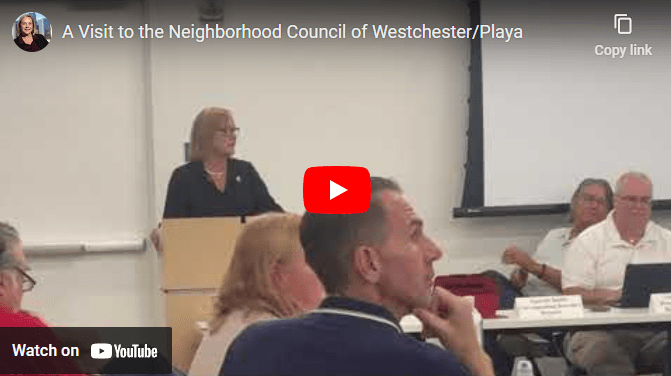
Traci Park Addresses Westchester Playa Neighborhood Council
Traci turned up at last week’s Neighborhood Council meeting to give a personal Government Affairs update from her office. During her remarks she came out strong on her commitment to support us in defining our own community in connection with our Community Plan Update (CPU).
She also explained the misinformation being circulated about her recent motion to the City Council asking for a letter regarding SB 423, exempting coastal zone and extreme fire hazard communities from that state law. As you’ll hear in the video, that motion has nothing to do with housing unit allocations like we’re discussing with our CPU.
The audio sucks, but I know how to find video transcripts on youtube. 😎 Please understand that this transcript is computer-generated and probably hasn’t been corrected by her team.
Traci’s remarks specifically about her motion start around the 5 minute mark, but the whole video is worth a watch.
0:00 board this evening we often have your 0:03 field Deputy Sean Silva here to give you 0:07 these updates but it was really 0:09 important for me that you all hear from 0:13 me directly this week so I am here to 0:16 give you your government update I have a 0:19 number of things that I want to talk to 0:21 you about I want to start with our 0:24 updates on the Community Plan update 0:26 that I came in just as I was catching 0:28 the tail end of the summary from last 0:31 week’s ad hoc committee meeting I think 0:34 we were all really excited to see the 0:37 level of Engagement and I was personally 0:40 really glad to have been invited and for 0:43 my team and I to have had the 0:44 opportunity to attend the meeting and to 0:47 hear from the community directly during 0:50 both public comment as well as the 0:53 community presentations 0:54 I am a little bit concerned however 0:57 about some misinformation that was 1:00 circulated both before and since about 1:05 the process 1:06 I think you on the board all know but 1:11 many members of the public didn’t know 1:14 and were not told this when they were 1:17 advised to attend the ad hoc team and 1:20 that is the community plan updates all 1:23 over the city have been underway for 1:26 many years now and I want to be very 1:30 clear about this my office was not 1:33 involved in the preparation of those 1:37 plan updates we received the drafts at 1:41 the same time they were released to the 1:43 public a couple of months ago since then 1:46 we have reviewed the plans and we have 1:49 met with community members and 1:51 stakeholders to discuss them we also met 1:54 with planning staff to advise them that 1:57 we were not satisfied with the current 2:00 drafts and the current proposals and 2:03 that further Community feedback needed 2:05 to be obtained and Incorporated 2:08 I was very clear throughout my campaign 2:12 and I hope and I believe that I have 2:14 been very clear since that local land 2:17 use decisions should be made at the 2:20 local level not by bureaucrats in 2:22 Sacramento 2:24 and my top priority is ensuring that 2:27 every Community has a voice in the 2:29 future development of their neighborhood 2:32 and that is why I directed planning to 2:35 go back to the neighborhood councils and 2:38 present again on their Draft plans 2:42 um and it’s also the reason that my 2:45 office is going to be leading our own 2:47 listening sessions to solicit feedback 2:50 directly from the community so that we 2:53 can make decisions as a community about 2:57 what is going to go into those updates 2:59 so uh CD 11 is hosting Westchester Playa 3:04 listening sessions uh from September 3:08 25th through October 6th 3:11 so you can look for an update in our 3:14 Weekly Newsletter on Saturday our 3:16 federal 11 updates you can sign up there 3:19 you can also go directly to the cd11 3:22 website and sign up through our website 3:26 to get a slot the feedback that we 3:29 obtain both through the neighborhood 3:32 Council process and through the 3:34 listening sessions that we will be 3:36 hosting as the cd11 office will be 3:39 passed back to the planning department 3:41 so even though I share your concerns and 3:45 I am going to do everything in my power 3:48 to make these changes for you 3:52 the fact remains that many dozens of 3:54 housing laws have come out of Sacramento 3:57 in the last several years and I want to 4:00 be very clear I did not vote on sb9 or 4:04 a 10. and like many of you and like many 4:07 of the people that we heard from in 4:09 public comment last week 4:11 I share concerns about the impacts on 4:14 our existing residential neighborhoods 4:16 and traffic and our infrastructure 4:20 and some of the very images that we were 4:23 shown in the ad hoc committee meeting 4:25 last week show us in real time what the 4:28 impacts of s b 9 and 10 look like 4:31 now those are state laws that we are 4:34 currently stuck with 4:37 and our best case scenario is to use the 4:41 Community Plan update process to make 4:44 responsible Collective and collaborative 4:47 decisions about where densification 4:51 should go and what strategies we can use 4:53 to preserve our single-family 4:55 neighborhoods 4:57 in the meantime I highly highly 5:00 recommend to you that you reach out to 5:03 your State Assembly members and make 5:06 your positions on densification and 5:09 state housing laws known directly to 5:11 them 5:13 there were also some comments that were 5:16 made 5:16 during last week at Hawks committee 5:19 meeting that I wanted to address because 5:21 they’re not accurate 5:24 one of the things that we heard that was 5:26 not true was that certain communities 5:29 are being Exempted from the community 5:32 plan update process 5:34 so let me be very clear on the record 5:37 about this now every community in CD 11 5:41 every community in Los Angeles is going 5:45 through a community plan update process 5:49 they’re in different phases depending on 5:52 when their plan was last updated 5:55 currently the communities in the 5:58 southern end of council District 11 are 6:02 going through their plan updates 6:04 the communities in the northern end of 6:06 the district will be next 6:09 another very important clarification 6:12 that I want to make relates to sb423 6:16 this is another state housing law 6:20 authored by the very same assembly 6:23 member who brought us sb9 6:26 SB 423 pushes densification across the 6:30 entire State of California and the city 6:32 of Los Angeles Los Angeles with limited 6:35 or no review 6:37 IT addresses how projects are reviewed 6:40 not where they can and can’t go 6:44 densification in our sensitive 6:47 environmental areas like our coastal 6:49 zone and our high fire severity zones 6:52 are huge concerns for obvious reasons 6:57 that’s why I introduced a motion and 7:00 counsel seeking a modification to s b 7:03 423 that would continue to require State 7:07 mandated review of multi-family housing 7:09 in those Hazard areas 7:12 and I want to be very clear about this 7:14 in no way does that exempt the coastal 7:17 zone or the high fire severity Zone from 7:19 contributing to affordable housing or 7:23 multi-family housing 7:25 it simply means that environmental and 7:28 fire mitigation efforts have to be 7:30 assessed and mitigated that’s all it 7:33 means 7:34 I also want to be clear that my 7:37 resolution is not based on economics or 7:40 any other demographics 7:42 the coastal zone actually includes parts 7:45 of Playa del Rey and some of the most 7:47 economically diverse portions of Venice 7:50 and all of council District 15. 7:53 our high fire severity zones do cover 7:56 neighborhoods in the Santa Monica 7:58 Mountains but they also include much of 8:01 the socio-economically diverse 8:03 communities near the sound of Susanna 8:05 Mountains and the San Gabriel mountains 8:08 and with tragic incidents like what 8:10 happened recently in Maui and the 8:13 paradise Fire or the Woolsey fire and 8:15 countless other examples 8:17 densification and commercialization in 8:20 those areas is something that we have to 8:22 be concerned about 8:24 and my resolution seeks basic review for 8:28 multi-family housing projects in those 8:30 zones so that motion has been continued 8:35 on the council agenda to September 12th 8:38 and so if anybody has any additional 8:40 feedback or questions or comments or 8:43 clarifications they would like about any 8:45 of the above please feel free to reach 8:47 out 8:48 and I would also just suggest that if 8:50 any of you members of this board or 8:53 members of the public hear something 8:55 that doesn’t sound right to you 8:57 something on social media you get a 8:59 flyer in your mailbox and it doesn’t 9:01 seem like it came from my office or it 9:04 came from me it probably didn’t 9:07 so please feel free to reach out 9:09 directly to me and my team if there is 9:12 ever a question or a concern whether it 9:15 relates to local development issues or 9:18 any other local issue 9:20 issue we are here to help we are here to 9:22 partner with you I am here to advocate 9:25 for Westchester Playa del Rey in this 9:28 in this land update I have heard these 9:30 concerns loud and clear I share them and 9:33 my task in this is to take the feedback 9:35 and make sure we end up with a final 9:38 product 9:39 that is what the community wants because 9:42 I do believe that we should be making 9:44 these decisions here as a community 9:48 so with that I would like to move on to 9:51 a couple of other updates from City Hall 9:53 uh there have been some
If you have questions about her motion, drop a comment. I understood the motion and have been trying to explain it to others, but some continue to insist the motion is to protect wealthy neighborhoods from the same densification we’re facing with our Community Plan Update. The motion does not do that in the least. The tsunami of housing laws are confusing. I get that.
Tracy is active in a number of local community organizations including the Neighborhood Council PLUC, Neighborhood Council Ad Hoc CPU Committee, Kentwood Home Guardians and Emerson Ave Community Garden Club. The views expressed in this post are Tracy’s alone, and should not be construed in any way as an opinion of any other group. Are you planning a meeting with the planners? Have Tracy along to make sure you get the same information other community members get. Are you willing to host a group of your neighbors for a talk? Tracy would be happy to join you.
About Tracy Thrower Conyers Tracy Thrower Conyers is a long-time resident of Westchester 90045. Tracy closely follows local politics, political players and social chatter relevant to Westchester. You’ll frequently find her at Neighborhood Council meetings, as well as on all the social platforms where 90045 peeps hang out. Tracy is a real estate broker and founding principal in Silicon Beach Properties. She is a recognized expert on Silicon Beach and its impact on residential and residential income real estate, and has been featured by respected media outlets including the LA Times, KPCC and KCET. Tracy is also a licensed attorney and accidental housing policy junkie.
Last week at the community meeting I sat through yet one more presentation by city planners telling us our community hasn’t done its fair share to provide housing in LA and in particular, affordable housing.
7 slides out of 45 were dedicated to fair housing, code for “you’re part of the westside and you need to take a bigger share of units.” It’s only fair after all for some bizarre undisclosed reason….
The logic, in case you miss the irony, is that the city wants to take our westside communities, the ones we worked so hard to make desirable, and stuff them with less desirable housing stock, thereby dragging down the community’s desirability. Who does that benefit again?
Oh yeah. The developers who get to build that crap, but I digress.
The planners then followed with a blatantly false slide claiming we’ve only built 45 affordable units from 2009 to 2020. Maybe they missed Phase 2 of Playa Vista?
And that was just the wind up to the slides about their stupid high density plans for us.
And not even a passing nod to all the existing affordable housing they’re willing to raze in our community in the name of high-rise market rate boxes, nor any kind of nod to the fact that Westchester already provides some of the most affordable housing on the westside.
And certainly no nod to the idea our streets are overburdened with traffic in and out of a world airport with expansion plans.
No, they have orders to rezone our little Mayberry for tens of thousands of high-rise units and like the good little soldiers they are, that is the unimaginative plan they put on the table.
Not even a cute little Village in sight.
They would have learned the error of their ways, had they bothered to stick around and listen to our counter plan. Instead, they waited around a token five minutes while the first community presentation started and then snuck out the back door.
I’ve heard them say many times they want our input, yet the first opportunity they had to hear it, they bolted.
And the presentations were impressive. You could tell all four groups worked very hard to provide thoughtful commentary. Our councilperson stuck it out and listened to everything, but the planners were long gone.
Our group recorded our plan, using the slides from our presentation on Monday. Watch the video and then please share with your neighbors and other Westchester friends and family.
Feedback we’ve already received on the video is that it’s easy to watch, so please take a few minutes and watch.
Tracy is active in a number of local community organizations including the Neighborhood Council PLUC, Neighborhood Council Ad Hoc CPU Committee, Kentwood Home Guardians and Emerson Ave Community Garden Club. The views expressed in this post are Tracy’s alone, and should not be construed in any way as an opinion of any other group. Are you planning a meeting with the planners? Have Tracy along to make sure you get the same information other community members get. Are you willing to host a group of your neighbors for a talk? Tracy would be happy to join you.
About Tracy Thrower Conyers Tracy Thrower Conyers is a long-time resident of Westchester 90045. Tracy closely follows local politics, political players and social chatter relevant to Westchester. You’ll frequently find her at Neighborhood Council meetings, as well as on all the social platforms where 90045 peeps hang out. Tracy is a real estate broker and founding principal in Silicon Beach Properties. She is a recognized expert on Silicon Beach and its impact on residential and residential income real estate, and has been featured by respected media outlets including the LA Times, KPCC and KCET. Tracy is also a licensed attorney and accidental housing policy junkie.












 Concerned For Westchester Playa